Walk into a modern preschool classroom today, and you will notice a clear shift. Learning is no longer limited to alphabets on the wall or worksheets on desks. Teachers are focusing more on how children learn rather than how much they memorize.
This shift is one of the biggest reasons sensory bins for preschool learning are becoming a classroom essential. Preschool educators now understand that children learn best through experience—by touching, exploring, and experimenting with materials around them.
In 2026, preschool sensory play kits are no longer considered optional activity tools. They are a foundational part of early childhood education.
What Are Sensory Bins for Preschool Classrooms?
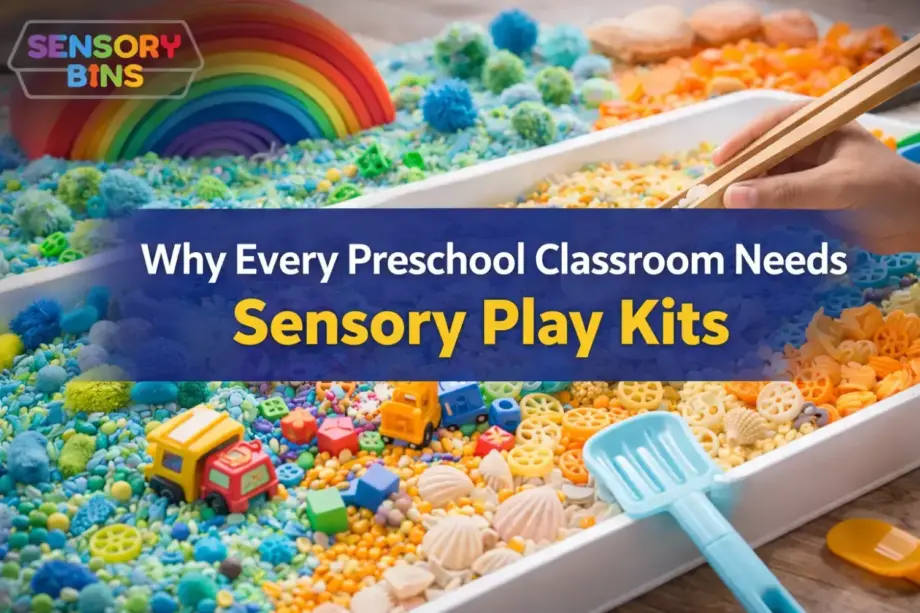
Sensory bins are structured containers filled with materials that stimulate a child’s senses. These may include grains, sand, fabric pieces, natural objects, scoops, or themed learning elements.
In a preschool classroom, sensory bins are intentionally designed. They are not random play trays. Teachers use them to support developmental goals such as fine motor skills, early math concepts, language building, and emotional regulation.
When used consistently, sensory bins become a powerful learning medium that supports both academic readiness and social-emotional growth.
Why Sensory Learning Is Critical in the Preschool Years
The preschool age is a period of rapid brain development. According to research published by the Center on the Developing Child at Harvard University, early sensory experiences play a key role in shaping brain architecture during the first five years of life.
Children do not learn best by sitting still. They learn by doing.
Sensory bins for preschool classrooms allow children to:
- Explore cause and effect
- Strengthen hand-eye coordination
- Build concentration naturally
- Learn through repetition without boredom
This kind of learning lays the foundation for writing, reading, and problem-solving skills later on.
How Preschool Sensory Play Kits Support Classroom Learning
Preschool sensory play kits are designed to align with classroom routines. They fit easily into learning centers, free play time, or guided activities.
Unlike single-use toys, sensory play kits offer open-ended learning. A single kit can support multiple learning outcomes depending on how it is used. For example, a grain-based sensory bin can support counting, sorting, vocabulary development, and cooperative play—all in one activity.
Teachers often report that children who regularly engage with sensory bins show better task engagement and improved transitions between activities.
Supporting Fine Motor Development Without Pressure
Fine motor skill development is one of the most important goals in preschool education. Before children can write, they must strengthen the small muscles in their hands.
Sensory bins for preschool classrooms naturally encourage:
- Scooping
- Pouring
- Pinching
- Transferring objects
These movements prepare children for pencil grip and handwriting without forcing structured practice. Occupational therapists frequently recommend sensory-based activities as a precursor to formal writing tasks.
This is one reason many preschools now integrate preschool sensory play kits into their daily schedules.
Sensory Bins and Emotional Regulation in the Classroom
Preschool classrooms can be overwhelming for young children. New routines, social interactions, and structured expectations can cause stress.
Sensory play has a calming effect on the nervous system. Studies published in Frontiers in Psychology highlight how tactile sensory activities help children regulate emotions and reduce anxiety.
Teachers often notice that sensory bins help children:
- Calm down after active play
- Focus before group activities
- Manage emotions during transitions
In inclusive classrooms, sensory play is especially valuable for children who need additional support with self-regulation.
Real Classroom Experience: What Teachers Are Seeing
Preschool educators across India are witnessing the impact of sensory learning firsthand.
A senior early childhood educator from Bengaluru shared that introducing sensory bins reduced classroom disruptions significantly. Children who previously struggled to sit during circle time were able to engage better after a short sensory play session.
Another preschool in Pune uses themed preschool sensory play kits weekly. Teachers observed improved language use as children described textures, actions, and objects during play.
These real-world experiences reinforce why sensory bins are no longer a trend—they are a necessity.
Aligning with Modern Preschool Teaching Approaches
Sensory bins for preschool classrooms align seamlessly with modern education philosophies such as Montessori and play-based learning.
These approaches emphasize:
- Child-led exploration
- Learning through experience
- Independence and confidence
Preschool sensory play kits encourage children to make choices, solve problems, and engage deeply with materials. This builds critical thinking skills from an early age.
Why Sensory Bins Are a Practical Choice for Preschools
From an operational perspective, sensory bins are easy to manage. They can be rotated, reused, and adapted to different themes or learning goals.
Preschools appreciate that:
- One kit supports multiple activities
- Materials are durable and reusable
- Children remain engaged for longer periods
This makes preschool sensory play kits both educationally valuable and cost-effective.
What Experts Say About Sensory Play in Early Education
Early childhood development experts consistently emphasize the importance of sensory-rich environments.
According to the National Association for the Education of Young Children (NAEYC), play-based sensory experiences support cognitive flexibility, creativity, and emotional well-being in young learners.
Such expert-backed insights strengthen the case for integrating sensory bins into every preschool classroom.
Why Sensory Bins India Focuses on Classroom-Ready Solutions
At Sensory Bins India, we work closely with educators to understand real classroom needs. Our preschool sensory play kits are designed to support learning outcomes while remaining easy to use in group settings.
Each kit is created with:
- Classroom practicality in mind
- Age-appropriate learning goals
- Safe, child-friendly materials
Our experience working with preschools has shown us that when sensory play is intentional, the impact on learning is significant.
The Bigger Picture: Preparing Children for Lifelong Learning
Preschool education is not about early academics alone. It is about building a strong foundation for lifelong learning.
Sensory bins for preschool classrooms help children:
- Develop confidence
- Build independence
- Learn through curiosity rather than pressure
These skills stay with children long after preschool ends.
Final Thoughts
Every preschool classroom needs sensory play—not as an add-on, but as a core learning tool.
In a world where early education is evolving rapidly, preschool sensory play kits offer a balanced approach to learning that supports development, engagement, and emotional well-being.
When children are given the space to explore through sensory experiences, learning becomes meaningful, joyful, and lasting.
Call to Action
If you are an educator or preschool administrator looking to enrich your classroom environment, explore thoughtfully designed sensory bins for preschool learning at Sensory Bins India.
Create classrooms where children learn by exploring, not memorizing.