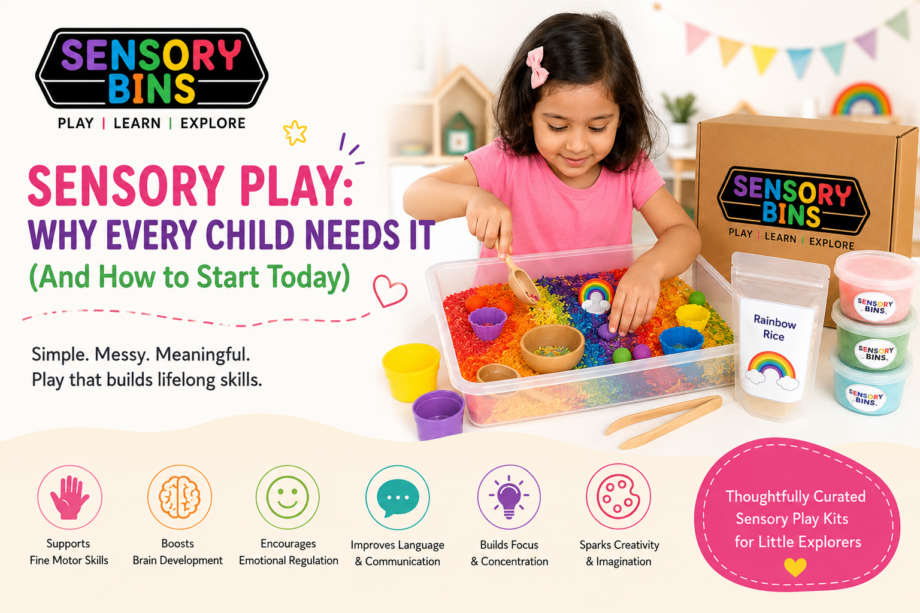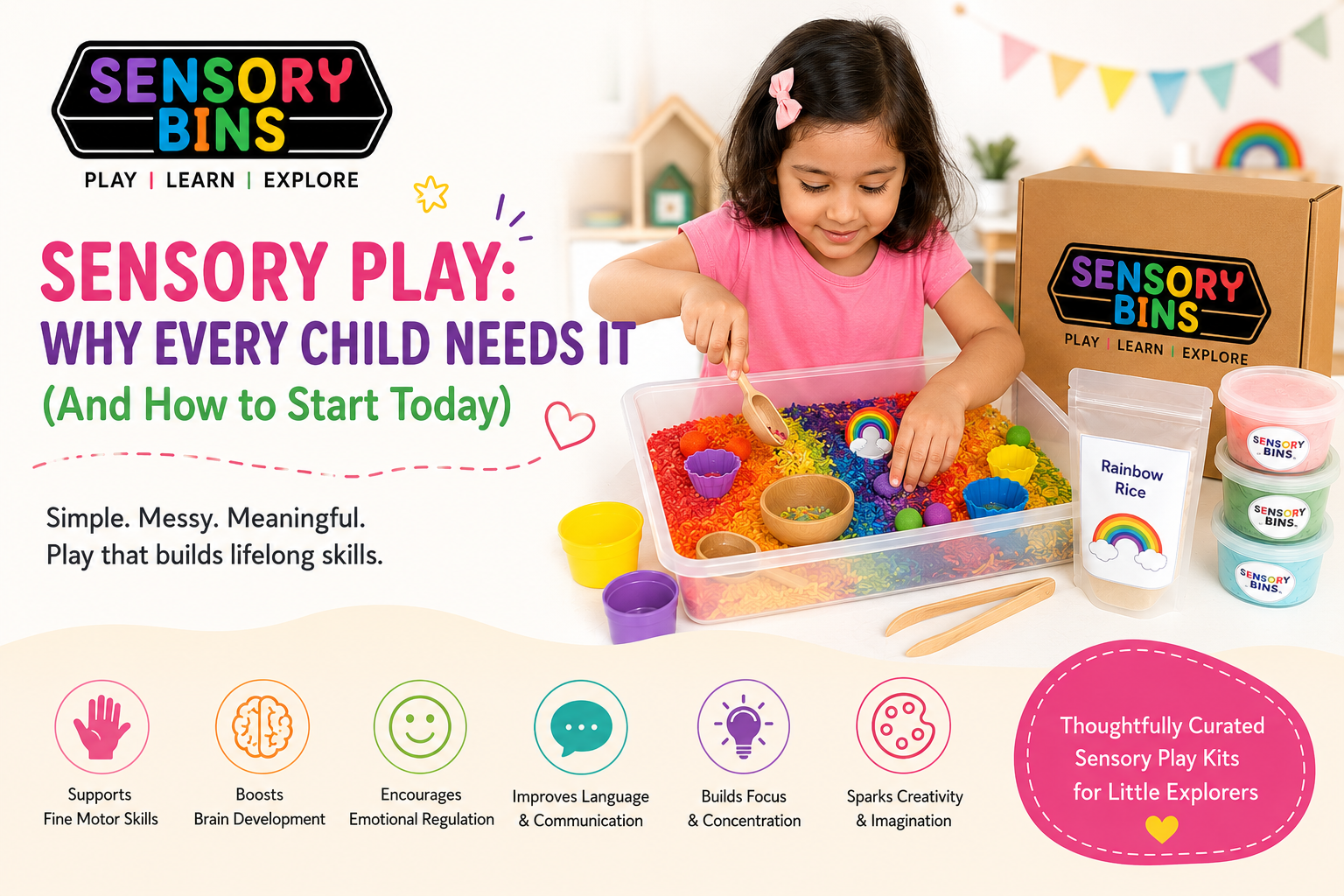
If you’ve spent any time around toddlers or preschoolers lately, chances are you’ve heard the term “sensory play” more than once. Parenting groups are buzzing about it, preschools are building entire curriculums around it, and pediatric therapists recommend it as one of the simplest ways to support early childhood development. But what exactly is sensory play, and why has it become such an essential part of modern parenting? At Sensory Bins India, we’ve spent years helping families understand and enjoy the incredible benefits of this simple yet powerful form of play.
What Is Sensory Play?
Sensory play is any activity that stimulates a child’s senses — touch, sight, sound, smell, and sometimes taste. Think of a child running their fingers through colored rice, squishing kinetic sand, scooping chickpeas into a bowl, or sorting beads by color. These aren’t just “messy” activities; they’re carefully structured experiences that engage a child’s brain and body at the same time.
Unlike passive entertainment such as screens, sensory play requires children to actively participate. They touch, pour, pinch, sort, and build — and in doing so, they’re developing skills that will support them for years to come.
Why Sensory Play Matters for Child Development
Sensory play isn’t just a trend; it’s backed by decades of child development research. Here’s what regular sensory play helps build:
- Fine motor skills – scooping, pouring, and pinching strengthen the small muscles in fingers and hands, which later support skills like writing and buttoning clothes.
- Cognitive development – sorting, matching, and cause-and-effect activities build problem-solving and early math skills.
- Emotional regulation – repetitive tactile motions have a calming effect on the nervous system, helping children self-soothe and manage big emotions.
- Language and communication – sensory bins are natural storytelling tools, encouraging children to describe textures, colors, and actions.
- Focus and attention span – open-ended, hands-on play naturally lengthens a child’s ability to concentrate on one activity.
This is precisely why sensory play is often recommended for children with autism, ADHD, and sensory processing differences — but it benefits every child, typically developing or otherwise.
How Sensory Bins India Makes Sensory Play Effortless
Setting up sensory play at home can feel intimidating for busy parents — sourcing safe materials, avoiding mess, and designing age-appropriate activities takes time most of us don’t have. That’s where Sensory Bins India comes in.
Every kit from Sensory Bins India is thoughtfully curated for children aged 1 to 8 years, using non-toxic, taste-safe bases made with home-based ingredients and FSSAI-certified edible colors. Each box arrives ready to go, complete with a sensory tray, activity guide, and boundary guide — so parents don’t have to guess how to introduce the play or manage the mess.
Whether it’s themed bins inspired by jungle adventures and underwater worlds, or simple starter kits for sensory beginners, Sensory Bins India designs every product around one goal: helping children learn through joyful, independent play.
Simple Ways to Introduce Sensory Play at Home
- Start small. A single bin filled with rice, pasta, or lentils and a few scoops is enough to begin.
- Add tools, not just fillers. Tongs, scoops, and small containers turn simple materials into skill-building activities.
- Rotate themes regularly. Changing the theme every few weeks (ocean, farm, construction) keeps curiosity alive.
- Set boundaries early. A designated tray or mat helps contain the mess and teaches children where play happens.
- Let them lead. Resist the urge to correct or direct — sensory play works best when children explore at their own pace.
Sensory Play Goes Beyond the Playroom
Sensory play isn’t limited to quiet afternoons at home. Many parents now choose sensory-based gifts and activities for birthdays and celebrations too. If you’re planning a party, sensory-themed kits make wonderful best birthday return gifts for kids that guests actually remember, and they pair perfectly with a thoughtfully packed return gift box for birthday celebrations.
Sensory play also fits naturally into the growing conversation around reducing screen time. If you’re exploring screen free alternatives for kids or looking for genuinely engaging screen free toys, sensory bins are consistently one of the most effective options parents turn to. And if you’re building a broader collection of learning tools at home, pairing sensory bins with other Education Toys for Kids rounds out a well-balanced, screen-free play routine.
Final Thoughts
Sensory play is one of the simplest, most effective ways to support your child’s growth — no screens, no pressure, just hands-on discovery. With ready-to-use kits designed for real families, Sensory Bins India takes the guesswork out of sensory play so you can focus on watching your child learn, laugh, and grow.
Ready to bring sensory play into your home? Explore the full range of kits at Sensory Bins India and find the perfect starting point for your child’s sensory journey.