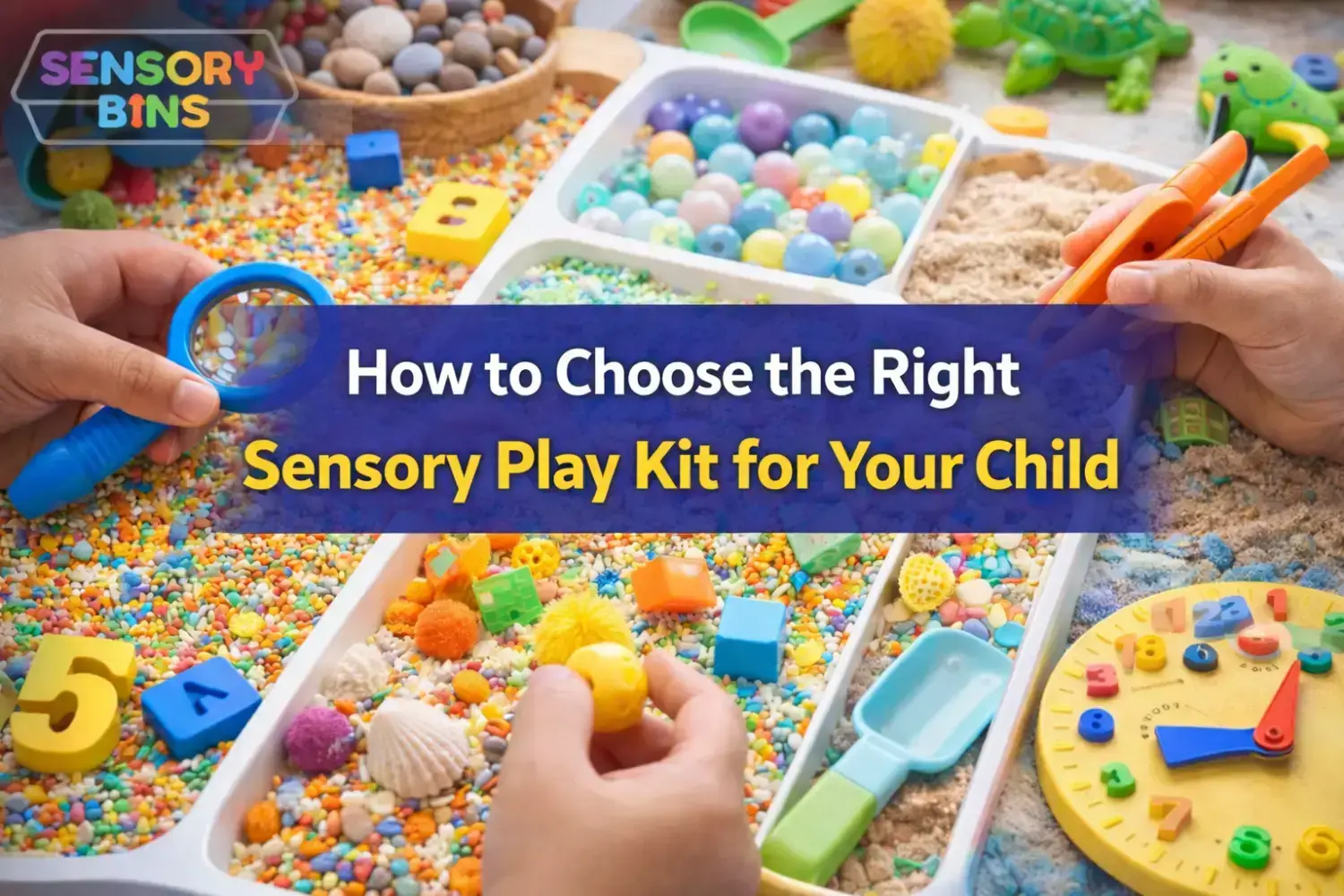
Children do not learn best by sitting still or memorizing instructions. They learn by touching, exploring, pouring, squeezing, sorting, and experimenting. This is where sensory play kits become essential. These kits engage multiple senses at once, helping the brain form stronger connections during the most critical years of development.
Parents often search for education toys for kids that are not just entertaining but meaningful. Sensory play bridges that gap. It supports curiosity while strengthening fine motor skills, language development, emotional regulation, and early problem-solving abilities.
Research from early childhood education studies consistently shows that hands-on sensory experiences help children retain information longer and engage more deeply with learning tasks. When sensory play is introduced thoughtfully, it becomes a powerful learning tool rather than just an activity.
What Makes Sensory Play Kits Different from Regular Toys?
Not all toys encourage learning in the same way. Traditional toys often have a fixed purpose, while sensory play kits allow open-ended exploration. This difference is crucial.
Sensory play kits are designed to:
- Encourage independent thinking
- Allow multiple outcomes instead of one “correct” use
- Support both structured and unstructured play
Education toys for kids that focus on sensory engagement invite children to explore at their own pace. One child may spend time sorting textures, while another may create patterns or imaginative scenarios. Both are learning, just in different ways.
Start with Your Child’s Age and Development Stage
One of the most common mistakes parents make when choosing sensory play kits is focusing only on age labels. While age recommendations matter for safety, development stage matters more.
For toddlers, sensory play should focus on large movements, simple textures, and basic cause-and-effect experiences. Preschoolers benefit from more detailed activities like scooping, sorting, and matching. Older children may enjoy sensory kits that combine learning goals such as early math, language, or science concepts.
When choosing education toys for kids, observe how your child currently plays. Do they enjoy repetitive actions? Are they curious about colors and patterns? Do they prefer hands-on tasks over screen-based activities? These observations help guide better choices than age labels alone.
Pay Attention to Sensory Variety, Not Quantity
More items do not automatically mean better play. A well-designed sensory play kit focuses on meaningful sensory experiences rather than overwhelming children with too many components.
Effective sensory play kits usually include a balance of:
- Tactile elements (soft, rough, smooth)
- Visual engagement (colors, shapes, patterns)
- Motor challenges (grasping, pouring, transferring)
Children need time to process sensory input. Kits that are too busy can lead to distraction instead of learning. Thoughtfully curated education toys for kids allow deeper focus and longer engagement.
Safety Is Not Optional—It’s Foundational
Sensory play often involves small objects, grains, or loose parts. This makes safety a non-negotiable factor when choosing a kit.
Look for:
- Non-toxic, child-safe materials
- Smooth edges and durable components
- Clear age-appropriate warnings
Trusted sensory play kits follow safety standards set by recognized child development authorities. Parents should also supervise play, especially for younger children, and introduce materials gradually.
According to child safety guidelines from pediatric associations, supervised sensory play supports independence while minimizing risks.
Choose Sensory Play Kits That Grow with Your Child
One of the smartest investments parents can make is choosing education toys for kids that adapt as children grow. The best sensory play kits can be used in multiple ways over time.
A simple sensory bin, for example, can evolve:
- From free exploration
- To sorting by color or size
- To storytelling and imaginative play
This adaptability keeps children engaged longer and provides better value. It also supports sustained learning rather than short-term novelty.
How Sensory Play Supports Emotional and Behavioral Development
Sensory play is not only about learning numbers or colors. It plays a key role in emotional regulation. Many early childhood educators use sensory activities to help children calm themselves, focus better, and manage transitions.
When children scoop rice, knead dough, or explore textures, their nervous system receives calming input. This is especially helpful for children who feel overwhelmed easily or struggle with attention.
Experts in child psychology note that sensory-based education toys for kids can support emotional balance by offering predictable, repetitive actions that create a sense of control.
Real-Life Example: Sensory Play in Everyday Learning
Consider a preschool classroom where children are introduced to a sensory play kit focused on textures and colors. Instead of being instructed to memorize concepts, children explore freely. One child begins sorting materials by color, another counts scoops, and a third creates a pretend story.
The same sensory play kit supports math, language, creativity, and social interaction—all without formal instruction. This is the power of intentional sensory play.
Parents often report similar experiences at home. Children return to sensory play kits repeatedly because each session feels new, even with the same materials.
The Role of Open-Ended Play in Brain Development
Neuroscience research emphasizes that open-ended play strengthens executive functioning skills such as planning, memory, and flexible thinking. Sensory play kits naturally encourage this type of play.
Unlike electronic toys that dictate actions, sensory play allows children to decide:
- What to do
- How long to engage
- When to change direction
This autonomy builds confidence and independence. When choosing education toys for kids, this factor is often overlooked but deeply impactful.
How to Identify Quality Sensory Play Kits
Quality sensory play kits share common traits:
- Purposeful design
- Developmental alignment
- Reusability across learning stages
Avoid kits that focus only on visual appeal without educational intent. The most effective education toys for kids are those that balance fun with developmental value.
Parents with hands-on experience in early learning often notice that children engage longer with simpler, well-thought-out kits than with flashy toys.
Expert Insights from Early Childhood Educators
Educators with years of classroom experience consistently recommend sensory play as a foundational learning approach. Studies published in early education journals highlight that children exposed to regular sensory activities show improved attention spans and problem-solving skills.
Occupational therapists also use sensory play kits to support motor development and sensory integration, reinforcing their value beyond playtime.
Making Sensory Play a Natural Part of Daily Life
Choosing the right sensory play kit is only the first step. The real impact comes from consistency. Sensory play does not need to be scheduled or structured every time. Even short, regular sessions can support learning.
Education toys for kids work best when they are accessible and familiar. Keeping sensory play kits within reach encourages spontaneous learning moments that feel natural rather than forced.
Learning That Grows with Your Child at Sensory Bins India
Choosing the right sensory play kit is less about following trends and more about understanding how your child learns. At Sensory Bins India, we believe that when education toys for kids encourage curiosity, independence, and hands-on exploration, learning happens without pressure. Sensory play kits create space for children to experiment, make mistakes, and discover at their own pace. Over time, these everyday play experiences quietly shape skills that matter far beyond early childhood—focus, confidence, problem-solving, and a genuine love for learning.