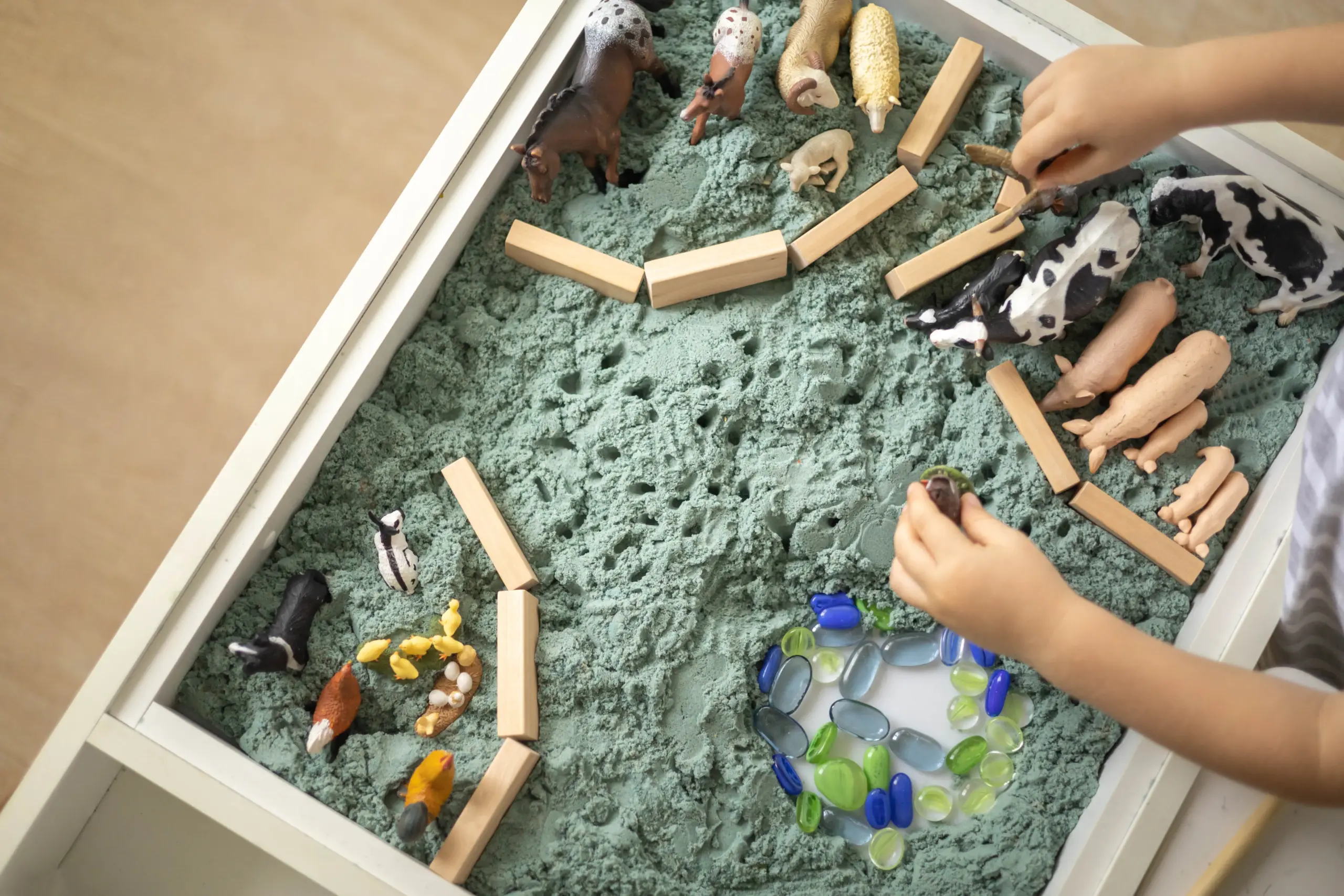
Early childhood is a crucial phase for brain development, learning, and emotional growth. During these formative years, children learn best through hands-on, play-based experiences. This is where sensory play kits play a powerful role.
At Sensory Bins India, sensory play kits are thoughtfully designed to support a child’s cognitive, motor, emotional, and social development—all through joyful, meaningful play.
What Are Sensory Play Kits?
Sensory play kits are curated sets of materials that stimulate a child’s five senses—touch, sight, sound, smell, and sometimes taste. These kits often include textures, colors, objects, tools, and activities that encourage exploration, imagination, and learning.
Sensory play kits are widely used by:
- Parents
- Preschools and daycares
- Therapists and educators
Why Sensory Play Is Important in Early Childhood
During the early years (ages 1–6), children’s brains form millions of neural connections every second. Sensory play helps strengthen these connections by allowing children to explore, experiment, and problem-solve naturally.
Sensory play is not just fun—it is essential for healthy development.
Key Benefits of Sensory Play Kits for Early Childhood Development
1. Enhances Cognitive Development
Sensory play kits help children understand how the world works through exploration.
How it helps:
- Builds problem-solving skills
- Encourages curiosity and experimentation
- Improves memory and attention span
Activities like sorting, pouring, scooping, and matching stimulate brain growth and logical thinking.
2. Develops Fine and Gross Motor Skills
Many sensory play activities involve hand and body movement.
Motor skill benefits:
- Strengthens hand muscles (fine motor skills)
- Improves coordination and balance (gross motor skills)
- Prepares children for writing and self-care tasks
Using tools like scoops, tweezers, or molds improves hand-eye coordination naturally.
3. Supports Language and Communication Skills
Sensory play creates opportunities for conversation and vocabulary building.
Examples:
- Describing textures, colors, and actions
- Learning new words through play
- Encouraging storytelling and imaginative play
Parents and educators can easily engage children in meaningful dialogue during sensory play sessions.
4. Encourages Emotional Regulation and Calmness
Sensory play is especially effective in helping children manage emotions.
Emotional benefits:
- Reduces stress and anxiety
- Helps children self-regulate
- Provides a calming, focused activity
Many children find sensory play soothing, making it ideal for quiet time or emotional resets.
5. Boosts Creativity and Imagination
Sensory play kits are open-ended, meaning there is no “right” or “wrong” way to play.
Creative benefits:
- Encourages imaginative thinking
- Supports role-play and storytelling
- Builds confidence through self-directed play
Children become creators, not just consumers.
6. Improves Social Skills
When sensory play is shared, children learn valuable social skills.
Social development benefits:
- Taking turns
- Sharing materials
- Cooperative play
Sensory play kits are excellent tools for group learning in homes and classrooms.
7. Supports Inclusive & Special Needs Development
Sensory play kits are widely used in early intervention and therapy settings.
They are especially beneficial for children with:
- Sensory processing differences
- ADHD
- Autism spectrum conditions
At Sensory Bins India, kits are designed to be inclusive, safe, and developmentally appropriate.
Why Choose Sensory Play Kits from Sensory Bins India?
Sensory Bins India focuses on purpose-driven play that supports real developmental milestones.
What sets Sensory Bins India apart:
- Age-appropriate, curated sensory kits
- Child-safe, high-quality materials
- Designed by early learning principles
- Encourages independent and guided play
Each kit is crafted to make learning joyful and meaningful.
How Often Should Children Engage in Sensory Play?
Experts recommend regular sensory play, even if it’s just:
- 20–30 minutes a few times a week
Consistency matters more than duration. Sensory play can be part of:
Daily routines
- Learning activities
- Calm-down or focus time
Final Thoughts
Sensory play kits are more than just toys—they are powerful learning tools that support a child’s overall development. From building motor skills and emotional resilience to encouraging creativity and language growth, sensory play lays a strong foundation for lifelong learning.
At Sensory Bins India, we believe that the best learning happens through play. Explore our thoughtfully designed sensory play kits and give your child the gift of joyful, development-focused learning.